A recipe asking for softened butter usually needs a texture that can blend while still holding its shape. A puddle of melted butter is a different ingredient state. Begin by checking what the recipe actually asks for, then soften only the amount you need.
Cut butter into small, even pieces and spread them in one layer at room temperature. Use it when it yields to gentle pressure but still holds its shape.
Go straight to the stepsBefore you begin
This is for recipes calling for softened butter. Pastry recipes that call for cold butter and recipes that call for melted butter need their own method.
What you’ll need
- The butter quantity in your recipe
- A clean plate and knife
- A place away from direct heat
Let’s do this
Step by step
- 01
Measure the required amount
Set aside only what the recipe needs. Keep the remainder stored according to its package instructions.
- 02
Cut into even pieces
Cut the butter into small pats and spread them across a clean plate. Separate the pieces rather than piling them together.
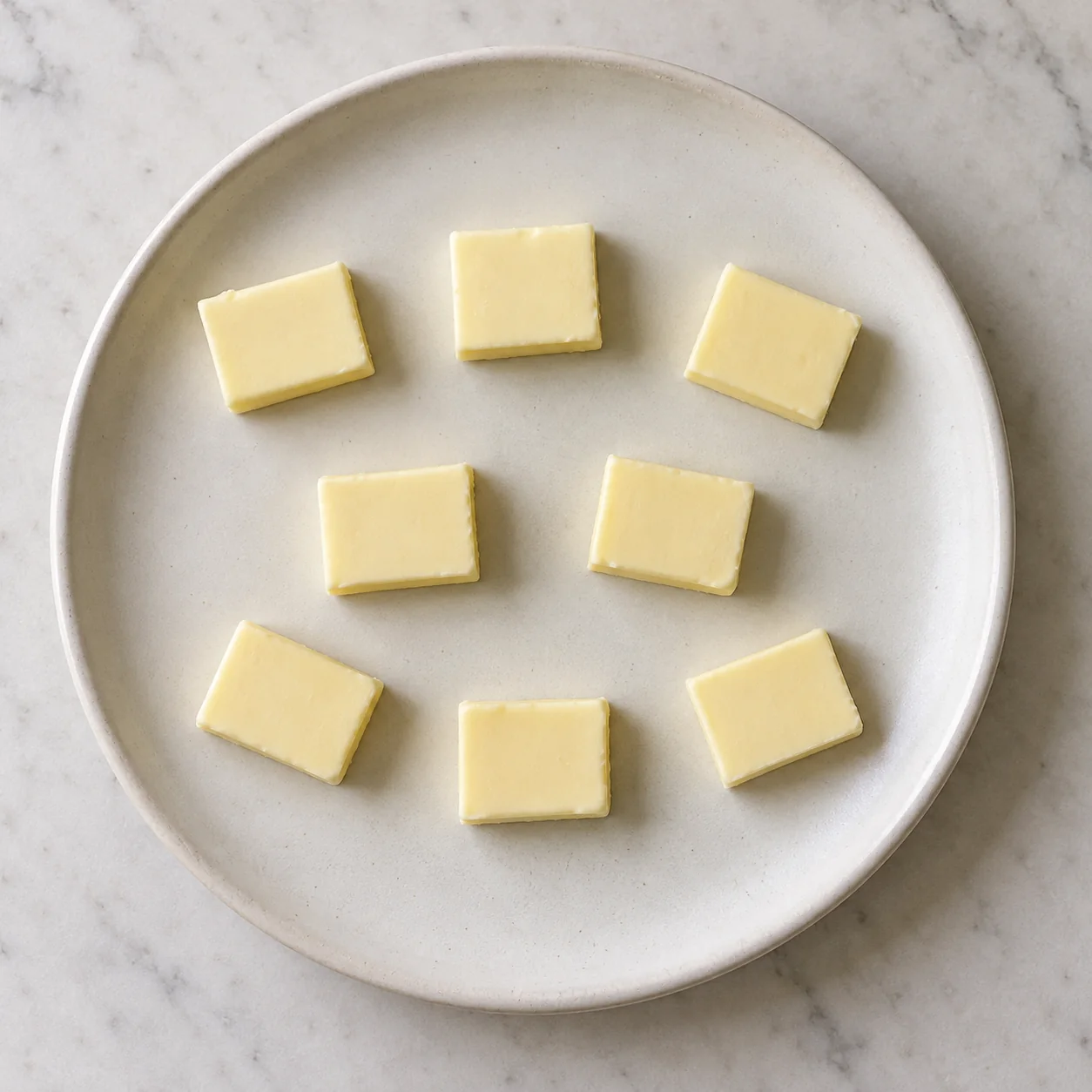
Separate the pieces so they soften evenly. Keep the plate away from direct heat and sunlight.Open full-size image - 03
Let it soften gradually
Leave the plate away from the stove and direct sunlight. Check periodically; kitchen temperature and piece size change the timing.
- 04
Test the texture
Press a piece gently with a clean fingertip. It should indent with a little resistance and retain its shape, rather than looking greasy or collapsing.
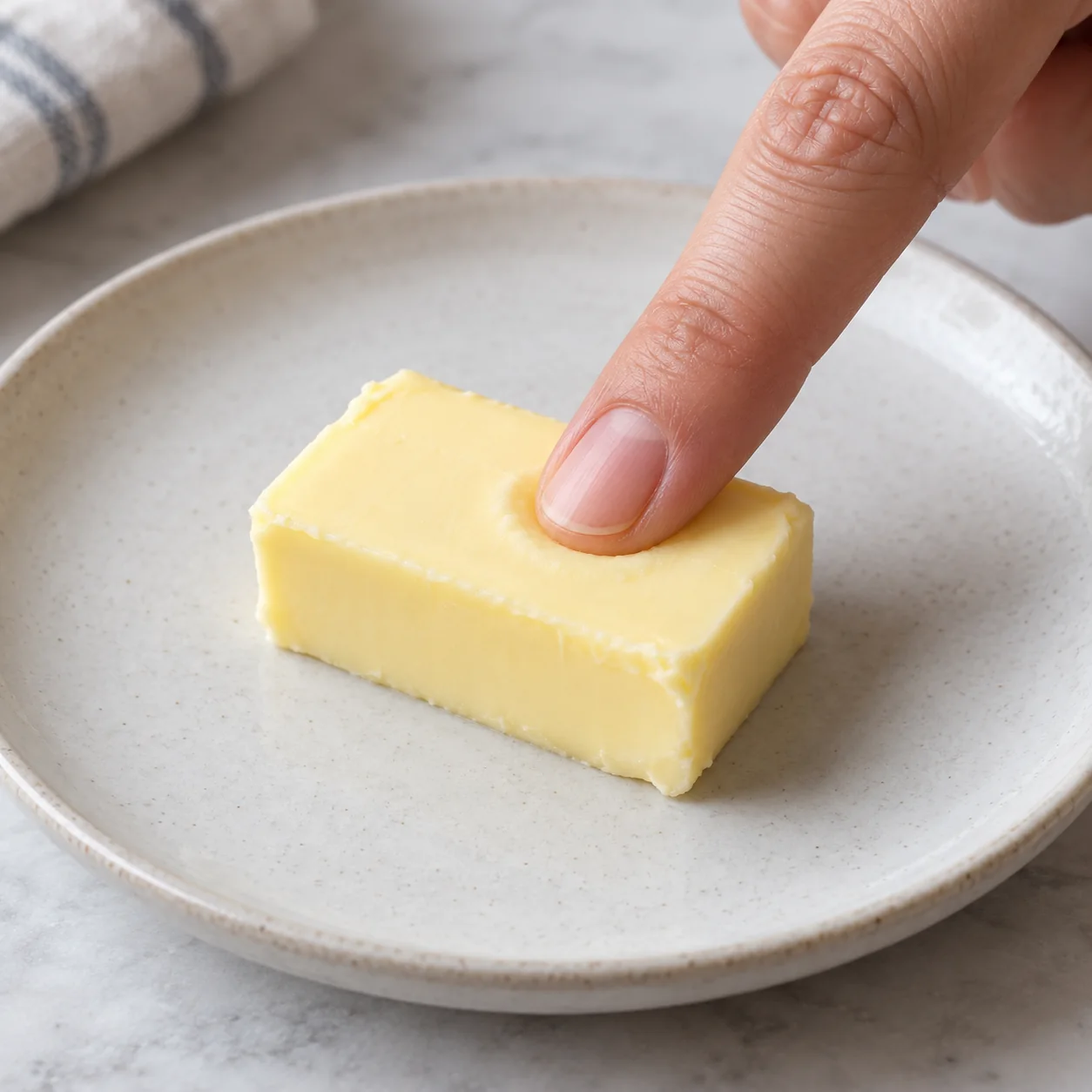
Softened butter yields with a little resistance. It should keep its shape rather than melt into a greasy puddle.Open full-size image - 05
Use it when ready
Continue with the recipe once the texture is appropriate. If the butter has become excessively soft, pause and reassess instead of automatically pouring it into the mixture.
Judge the butter, not a fixed countdown
A cold kitchen and a hot kitchen do not produce the same result in ten minutes. Use the texture test as your decision point. Preparing the butter before measuring the other ingredients gives it time without making you leave the entire baking project waiting.
Try to keep the pieces reasonably similar in size. One large lump surrounded by thin slivers makes it harder to judge readiness: some butter may be soft while the center of the lump is still firm.
Why this guide uses a simple method
Microwave methods can work, but the result depends on the appliance, butter shape, starting temperature, and timing. For a first attempt, cutting the butter and checking it gives you a clearer view of the change. If you use a microwave method from a recipe, follow that specific method and watch carefully.
A quick final check
- The recipe calls for softened butter.
- The pieces hold their shape and yield to pressure.
- There are no melted pools.
Common questions & sticking points
Can melted butter replace softened butter?
Not automatically. The recipe’s mixing method and final texture may depend on butter that still holds its structure.
Can I put softened butter back in the fridge?
King Arthur discusses returning softened butter to the fridge, but very soft or partly melted butter may no longer behave the same in the intended recipe. Follow storage directions and avoid using questionable butter.
Sources & further reading Optional
References used to check this guide. Follow your product’s own safety instructions where its design differs.
- King Arthur Baking: Recognizing softened butter
- King Arthur Baking: Slicing butter and returning it to the fridge