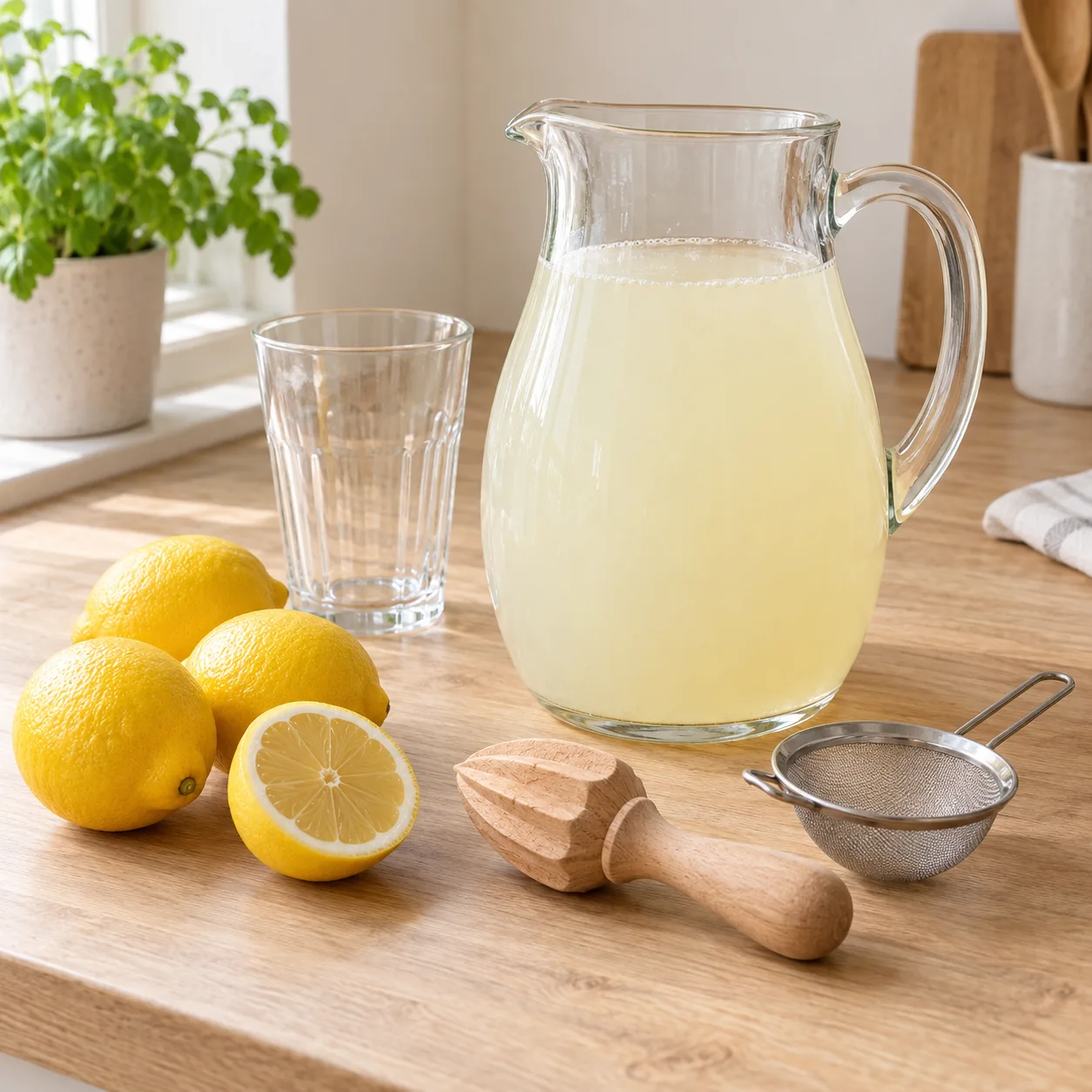
Lemonade is easier to adjust when the juice, sweetener, and dilution are measured separately. This starting batch uses Simply Recipes’ less-sweet option and its range of added water. Taste after mixing; different lemons do not all have the same sharpness.
Make a light syrup, combine it with measured lemon juice and cold water, then taste before adding ice.
Go straight to the stepsBefore you begin
Wash your hands and rinse the lemons under running water before cutting. Skip soap and produce detergents. Discard rotten fruit. For anyone advised to avoid untreated juice, use a commercially pasteurized juice suitable for lemonade; home squeezing and adding sugar do not pasteurize it.
What you’ll need
- 1 cup freshly squeezed lemon juice
- ¾ cup granulated sugar
- 1 cup water for the syrup
- 2 to 3 cups additional cold water
- Ice and optional lemon slices
- Small saucepan, spoon, measuring jug, citrus juicer or reamer, and pitcher
Let’s do this
Step by step
- 01
Choose and prepare the lemons
Choose firm lemons that feel heavy for their size; thin-skinned fruit generally yields more juice. Bring chilled whole lemons toward room temperature for easier squeezing. After washing, roll each gently on the counter under your palm, then cut across the middle.
- 02
Measure the juice
Squeeze the halves using a citrus press, reamer, or your hands over a bowl. Remove the seeds and measure one cup of juice in a jug. Measuring the collected liquid is more dependable than assuming every lemon provides the same amount. Set it aside while preparing the sweetener.
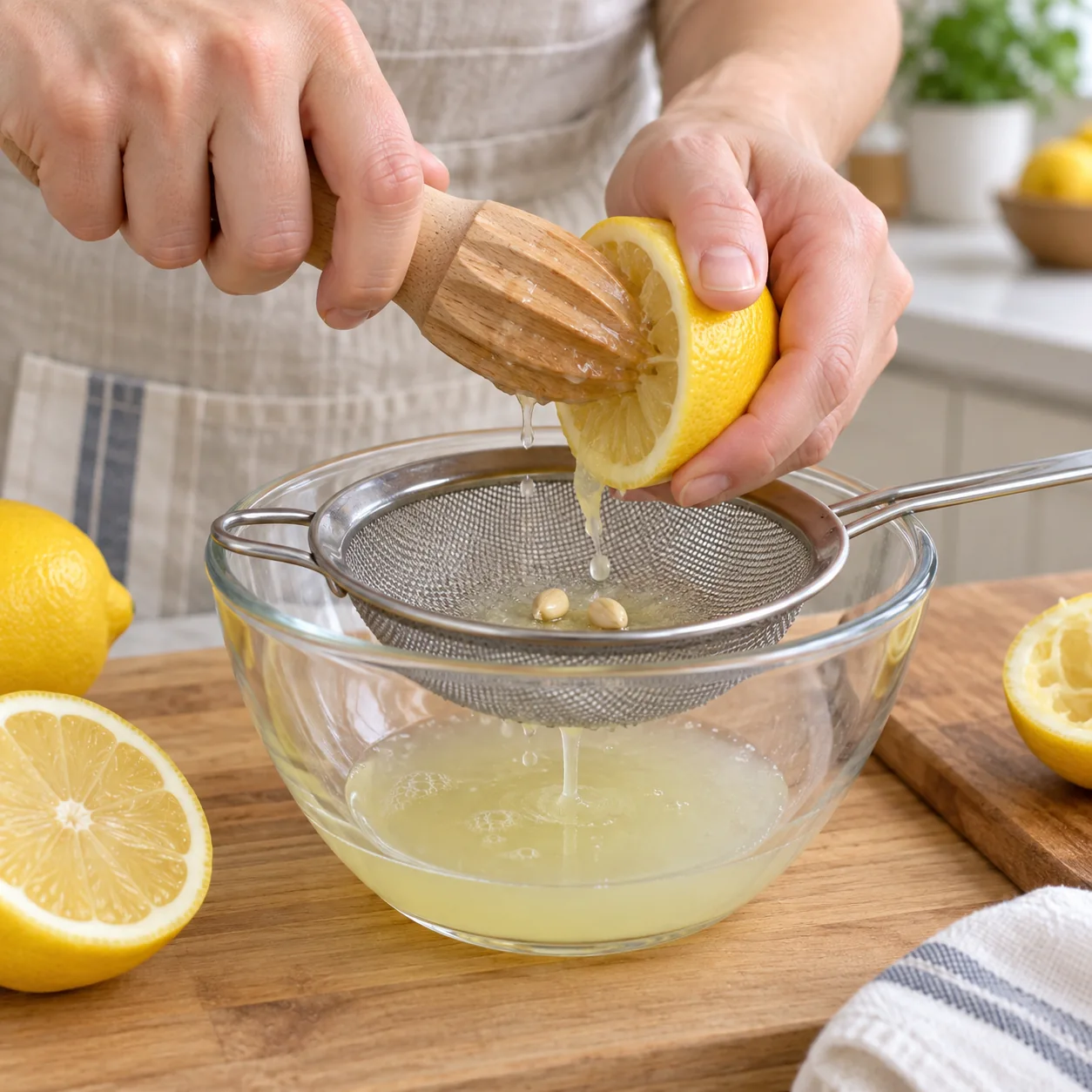
Catch the seeds, then measure the collected lemon juice.Open full-size image - 03
Dissolve the sugar completely
Put the sugar and the syrup water in a small saucepan. Warm gently, stirring until the grains disappear into the liquid, then remove from the heat and let cool. You are dissolving sugar, not cooking caramel. Check the bottom with the spoon for remaining grit before combining the drink.
- 04
Mix the pitcher
Pour the measured juice and cooled syrup into the pitcher. Add the lower amount of cold water from the ingredient list and stir thoroughly. Keep the remaining water nearby. Starting with a stronger mixture leaves room to dilute it after tasting rather than immediately overshooting the lemon flavor.
- 05
Taste and make one adjustment at a time
Taste a small spoonful. If it is too concentrated, add some reserved cold water. If sweetness dominates, a little extra lemon juice helps; if it needs sweetness, add dissolved syrup instead of dry sugar. Stir and taste again after each adjustment, rather than adding several corrections at once.
- 06
Chill and pour over ice
Chill the pitcher until you want to serve it. Put ice in the glasses and pour the lemonade over it, adding a lemon slice if desired. Stir the pitcher before refilling glasses so the drink is consistent from one pour to the next.
Optional supplies on Amazon
Affiliate disclosure: As an Amazon Associate I earn from qualifying purchases. How our links work.
Use what you already have. These links open Amazon search results so you can compare suitable supplies; they are not individual product reviews.
Troubleshooting: sugar at the bottom
Grainy lemonade usually means the sugar was not dissolved before the cold ingredients met. Prepare the sweetener separately next time. If you need an extra sweetener for adjustments, a simple syrup made from equal volumes of sugar and water provides a pourable option; let it cool before adding.
Troubleshooting: weak flavor after serving
Melting ice adds water. Avoid adding ice to the pitcher long before serving. For a stronger drink, use less optional water; more sugar cannot restore diluted lemon flavor.
A quick final check
- The sugar is dissolved with no gritty layer.
- The mixed drink has been tasted before serving.
- Extra water and ice have been considered separately.
Common questions & sticking points
Can I flavor it with mint or basil?
Yes. For a separate batch of simple syrup, steep a handful of the fresh herb in the syrup after it leaves the heat, then strain after about fifteen minutes. Use that syrup to sweeten the drink gradually. This adds aroma without leaving loose leaves in every glass.
What can I do with extra fresh lemon juice?
Freeze it in an ice cube tray, then transfer the solid cubes to a freezer bag. Label the amount in each cube if you measure it first. That gives you useful portions for another pitcher or a recipe without having to thaw one large container.
Can I simply add lemon slices to sweet water?
Slices are a garnish here; the measured squeezed juice supplies the main lemon flavor. Keep the juice in the recipe even if you add decorative slices to the pitcher or glasses.
Sources & further reading Optional
References used to check this guide. Follow your product’s own safety instructions where its design differs.
- Sunkist Growers: fresh lemonade
- Love and Lemons: lemonade assembly
- Simply Recipes: lemonade proportions and adjustment
- FDA: juice safety and preparation
- Utah State Extension: selecting and preparing lemons
- Love and Lemons: simple syrup method