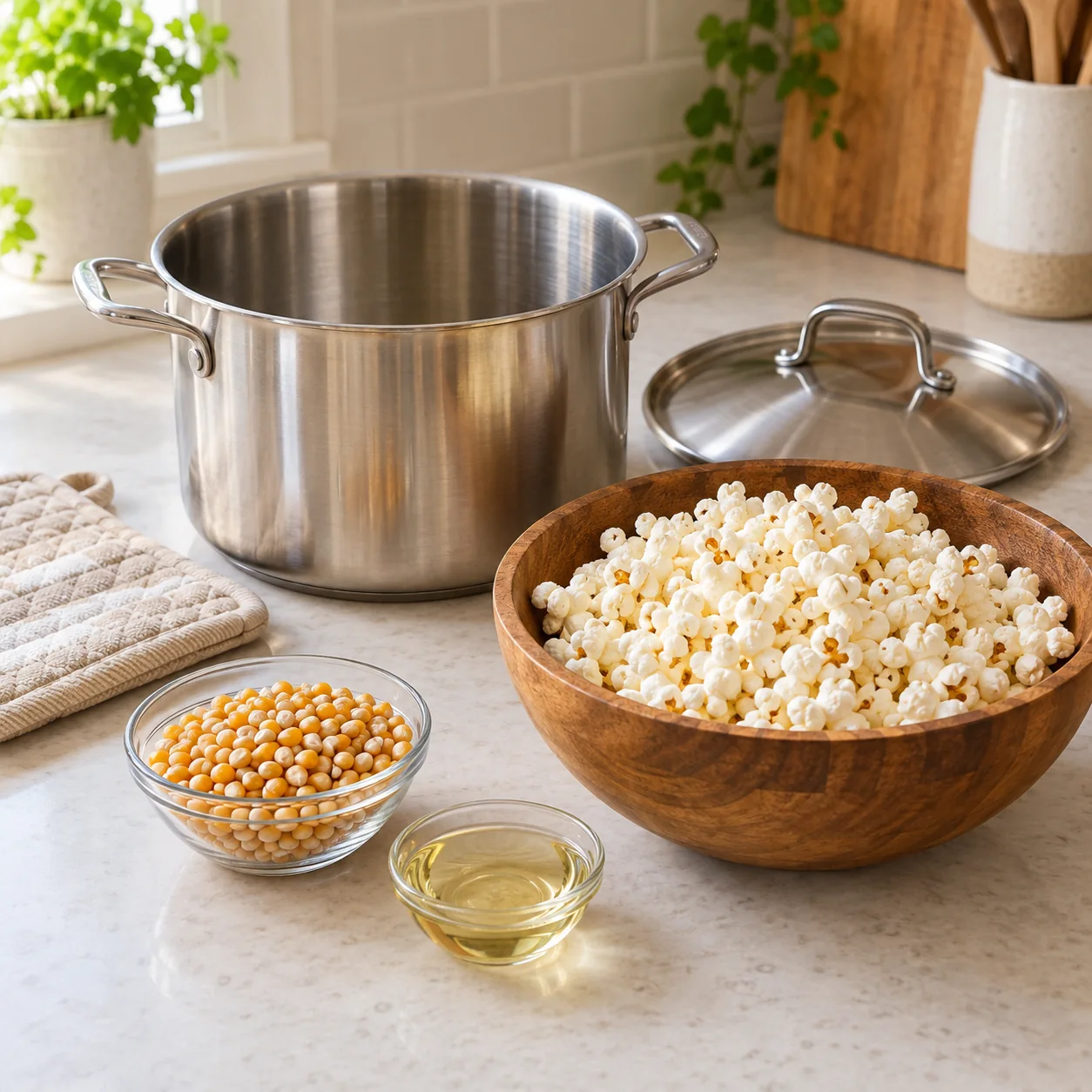
This small batch follows the quantities and brief off-heat warming stage in Simply Recipes’ stovetop method. A saucepan works well when the kernels fit in a shallow layer and the lid leaves room for expansion. The finished texture depends on heat control and letting steam escape.
Use a measured batch, warm the kernels evenly, keep the pan moving, and stop when popping becomes infrequent.
Go straight to the stepsBefore you begin
Have the bowl ready and stay at the stove throughout. Keep your face away when opening the lid: trapped steam is hot, and a few kernels can still pop after the pan leaves the burner.
What you’ll need
- ⅓ cup plain popcorn kernels
- 3 tablespoons olive or coconut oil
- A heavy 3-quart saucepan and its lid
- A large serving bowl
- Dry oven mitts
- Salt and optional melted butter, to taste
Let’s do this
Step by step
- 01
Warm the oil with a few test kernels
Put the measured oil and three or four kernels in the saucepan over medium-high heat. Cover the pan as the test kernels heat. Keep the remaining kernels nearby. The test kernels provide a visible and audible cue that the oil is ready; do not use smoking oil as the target.
- 02
Add the batch and pause briefly
When the test kernels pop, add the remaining kernels in an even layer. Cover the pan, take it off the burner, and wait about thirty seconds. This pause helps the newly added kernels warm before they return to active heat.
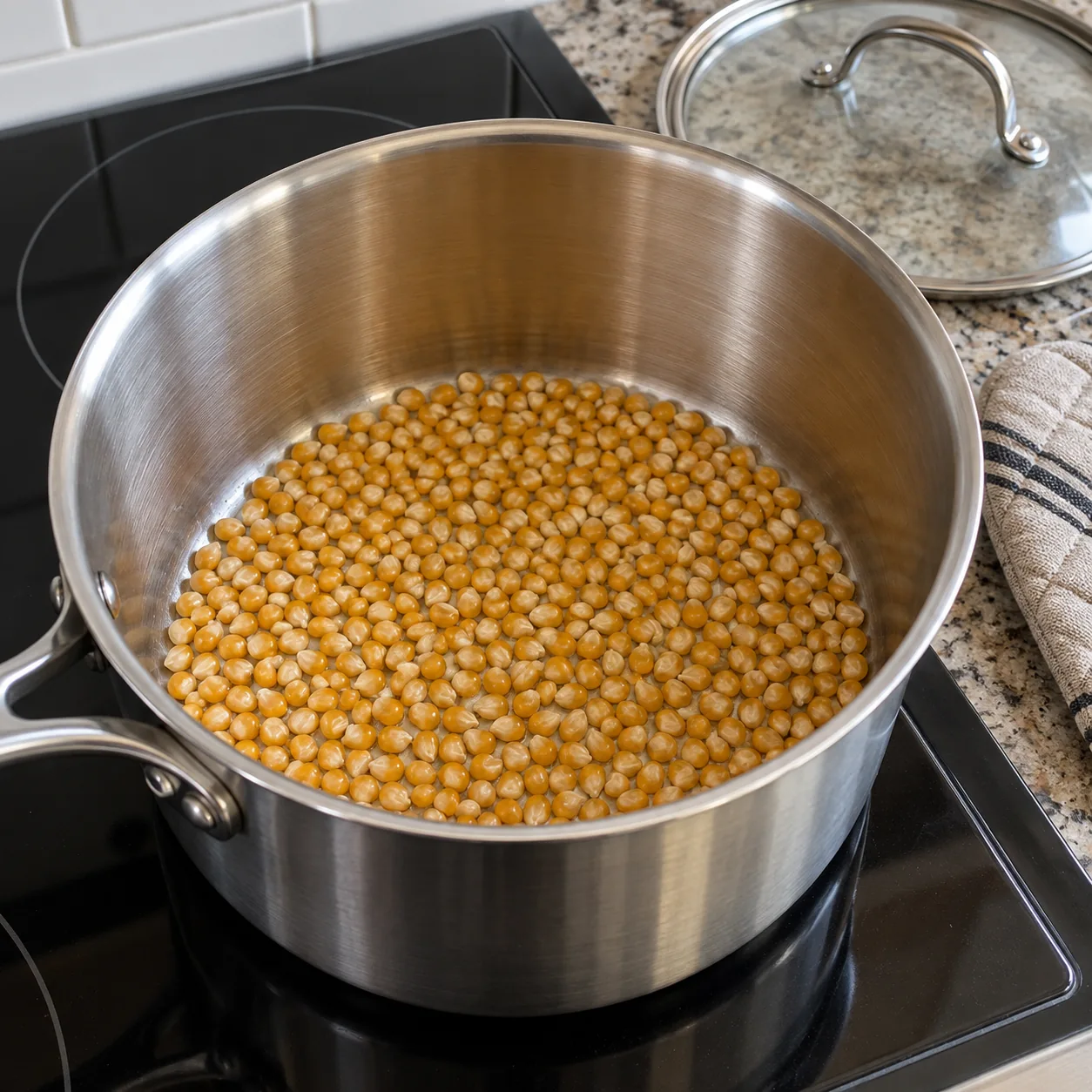
Spread the kernels evenly, then cover the pan for the off-heat pause.Open full-size image - 03
Return to the burner and keep moving
Put the covered pan back on the heat. As popping gets going, move it gently back and forth so kernels heat more evenly. Leave a small gap at the lid for steam to escape, while retaining the popping corn. Reduce excessive heat instead of letting the bottom scorch.
- 04
Listen for the stopping point
When you hear roughly two seconds between pops, take the pan off the heat. Do not chase every last kernel with another long burst of heat. Open the lid away from your face and hands, allowing steam to escape before tipping the popcorn into the waiting bowl.
- 05
Season the warm popcorn
Sprinkle on salt or dry seasonings and toss to distribute them. Work in light additions, tasting between them so the first handful is not heavily seasoned while the bottom stays plain. Pour out the whole batch promptly instead of leaving it enclosed in the hot pan.
- 06
Add butter after popping, if wanted
Drizzle melted butter over the popped corn, then toss again. Keep butter as a topping rather than using it as the popping fat: it can burn at the heat needed for popping. Sunflower, canola, corn, olive, or coconut oil are supported alternatives for popping.
Optional supplies on Amazon
Affiliate disclosure: As an Amazon Associate I earn from qualifying purchases. How our links work.
Use what you already have. These links open Amazon search results so you can compare suitable supplies; they are not individual product reviews.
Troubleshooting: tough or damp popcorn
A tightly sealed pot traps the moisture released during popping. Vent the lid slightly during the active stage and empty the pan when done. If the first batch is chewy, check that steam had a route out before increasing the oil or extending the cooking time.
Troubleshooting: scorched corn and unpopped kernels
Too much heat can brown the bottom before the batch finishes. Use a heavy pan, shake during popping, and finish by sound. Older kernels can also leave more unpopped pieces. A different batch of kernels is a better comparison than repeatedly cooking the finished popcorn longer.
A quick final check
- The popcorn is out of the hot pan.
- Steam has escaped before serving.
- Hard unpopped kernels are left uneaten.
Common questions & sticking points
Do I need a dedicated popcorn maker?
No. A heavy saucepan or skillet with a lid can pop loose kernels. If you switch to a powered popper, use its own quantities and operating directions rather than this saucepan method.
Can I double the kernels in the same pan?
Only if the pan still accommodates a single shallow layer and enough expansion space. Making two batches is easier to control than crowding a small pan.
Sources & further reading Optional
References used to check this guide. Follow your product’s own safety instructions where its design differs.
- Orville Redenbacher’s: stovetop technique
- Simply Recipes: stovetop popcorn method
- The Popcorn Board: preparation guidance
- JOLLY TIME: stovetop popcorn