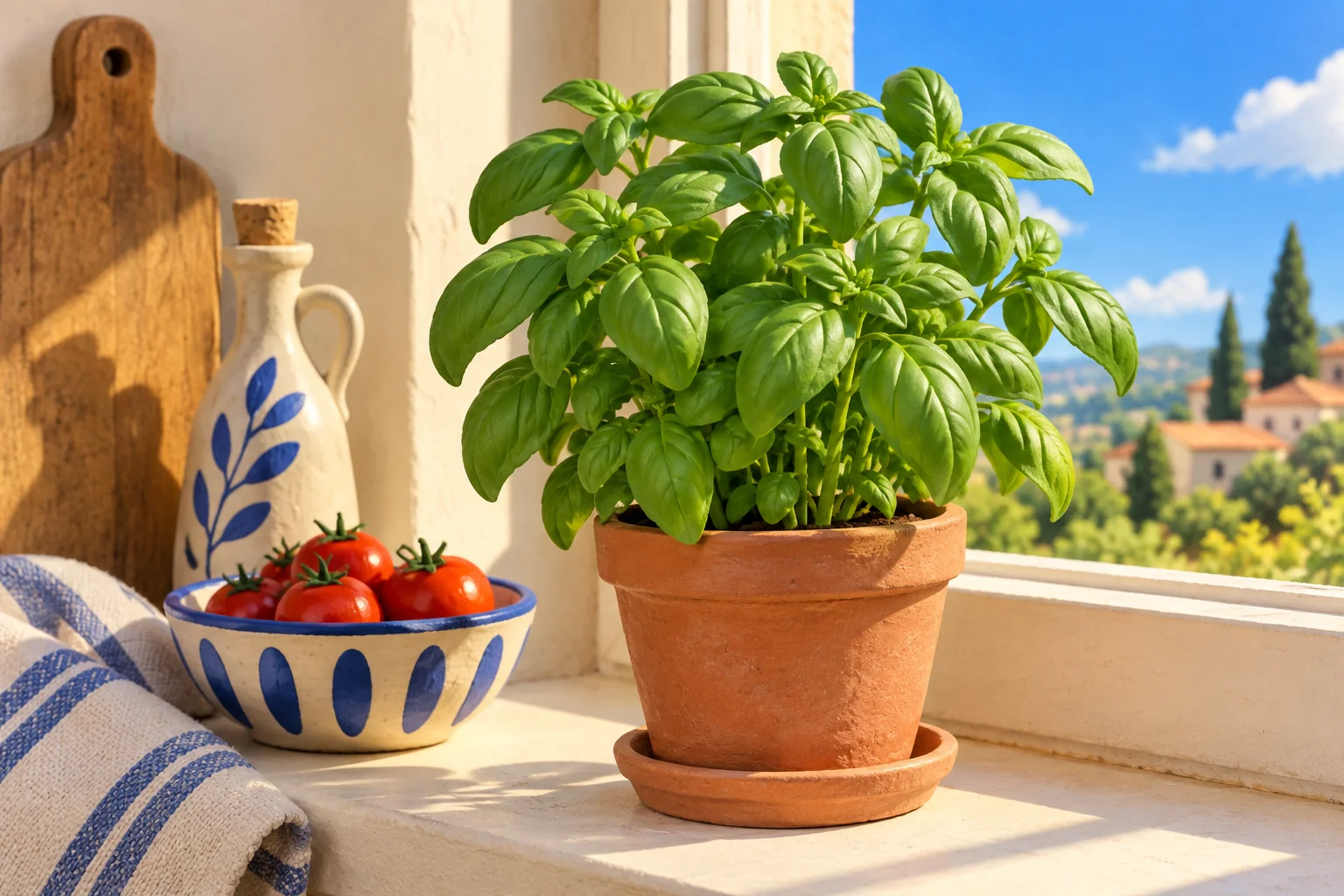
Put a young basil plant in a draining pot with suitable potting mix, give it a warm bright position, keep the mix evenly moist, and harvest shoot tips as it grows.
Affiliate disclosure: We may earn a commission when you buy through these links. As an Amazon Associate I earn from qualifying purchases. How our links work.
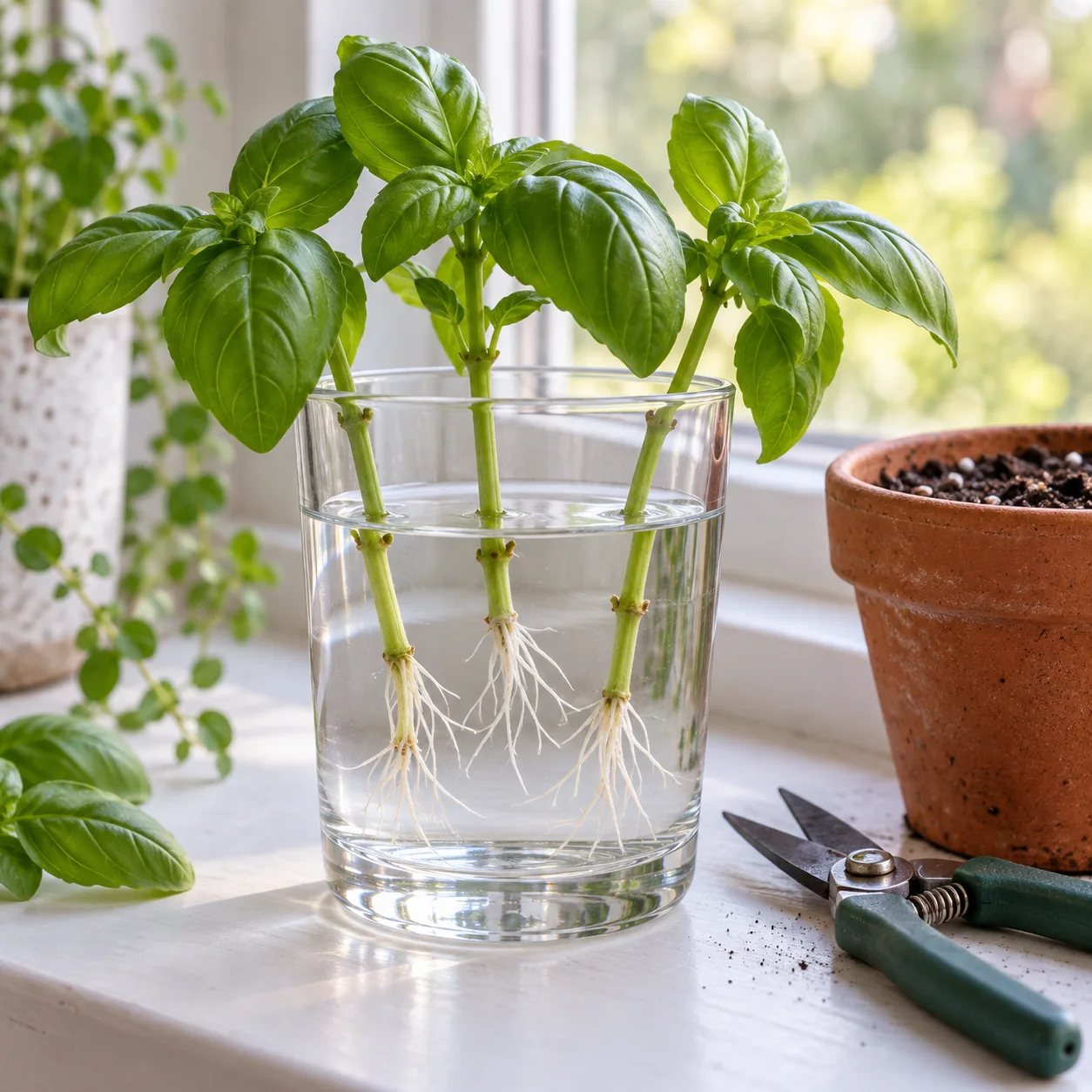
Take a healthy basil stem, cut below a node, remove the lower leaves and root the bare lower stem in water. Move the rooted cutting into potting mix once it is ready.
From a cut stem to a rooted plant: follow the six steps before potting. Open full-size image ↗
Optional tools & supplies
Affiliate disclosure: We may earn a commission when you buy through these links. As an Amazon Associate I earn from qualifying purchases. How our links work.
Continue normal basil care as the plant establishes. Keep it well watered, provide a sunny growing position, and pinch growing tips later to encourage a fuller plant.
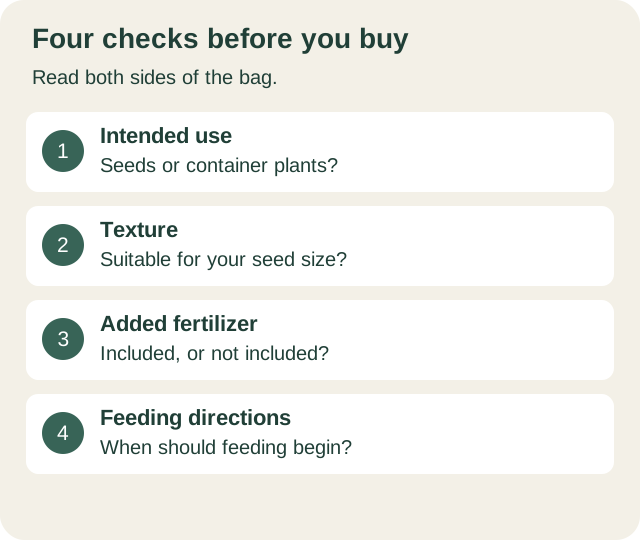
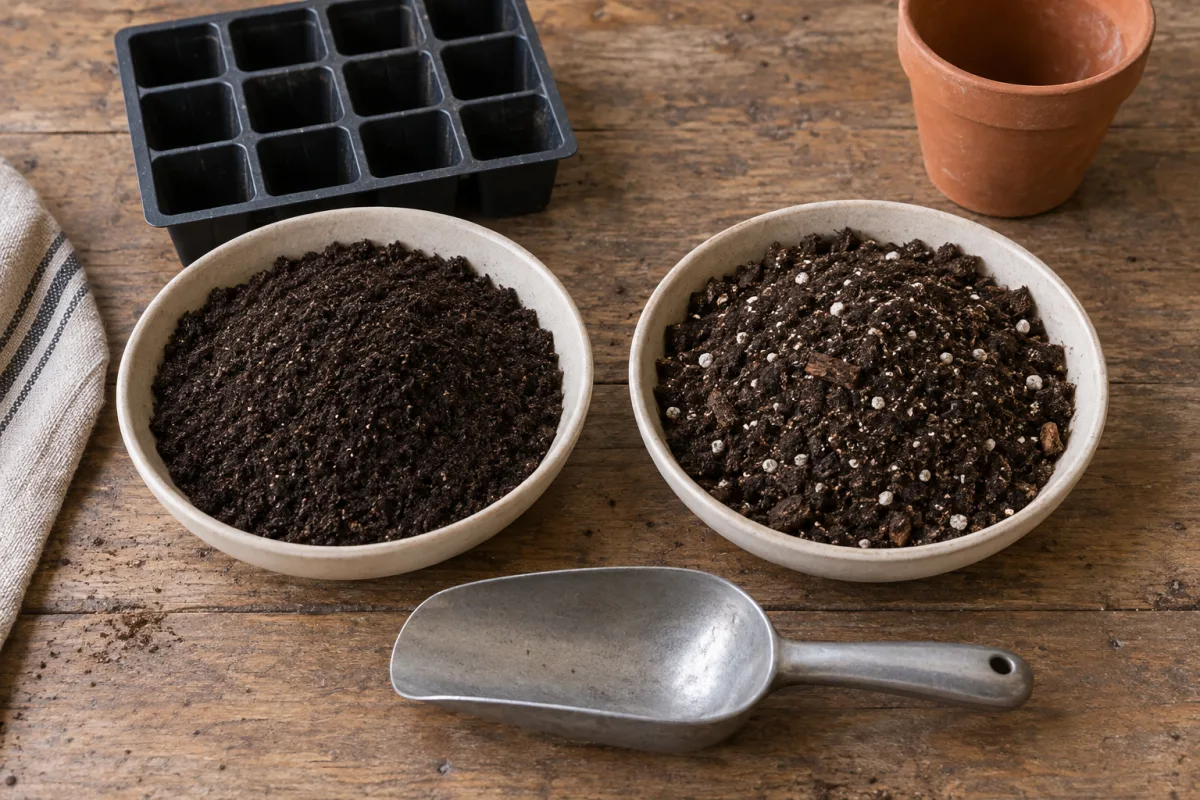
Fine seed-starting mix is useful for small seeds. A suitable soilless potting mix can also start many vegetables. Choose by intended use, texture and fertilizer information, not the bag name alone.
No. Maryland Extension notes that a suitable soilless potting medium works for general vegetable seed starting. Fine seed-starting media are particularly useful for very small seeds.
No. Check the package rather than assuming either potting mix or seed-starting mix includes nutrients. Keep its feeding directions so you know when supplementation is appropriate.
Yes, if it is sound and properly cleaned and disinfected before reuse. Check that drainage openings are clear and that the tray still supports the containers securely.
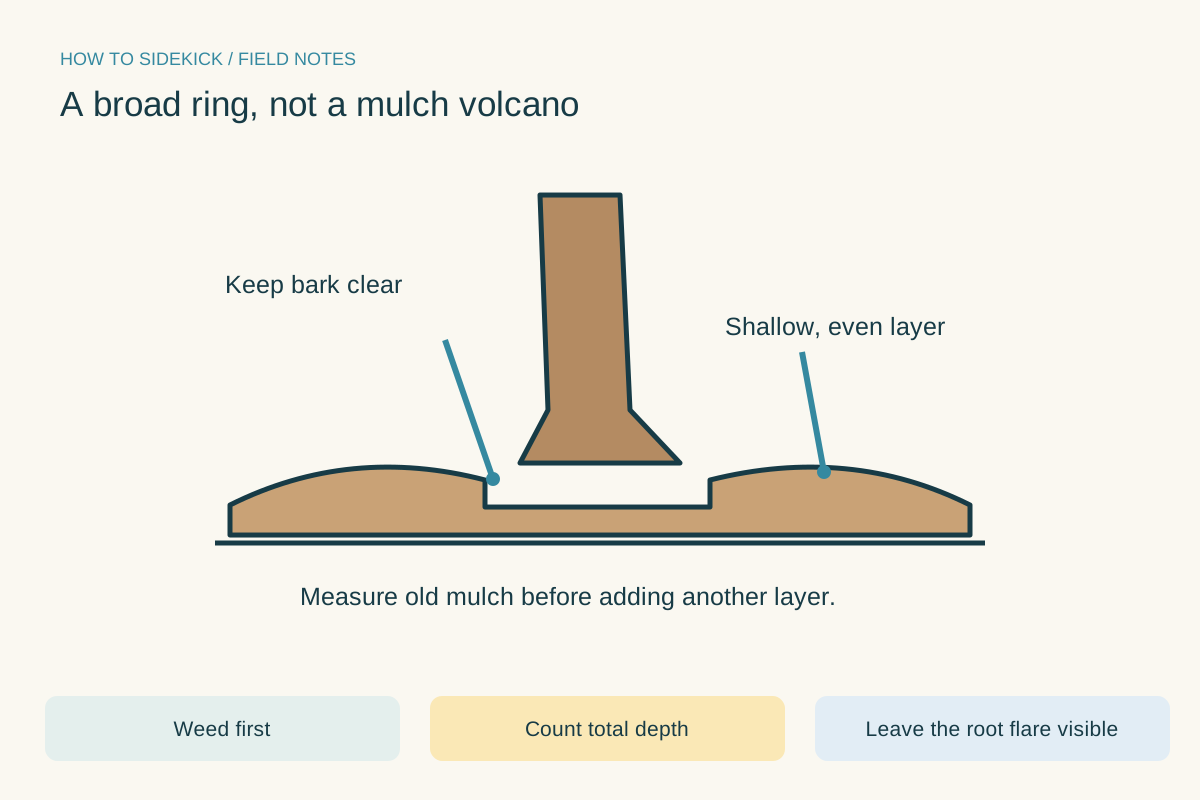
Optional dyed mulch for suitable landscape beds. Count the existing depth and keep trunks and crowns clear. Follow the bag directions, including keeping newly spread mulch dry for 24 hours to protect the color; check local availability.
Not routinely if it is sound and appropriate. Break up problematic mats and account for its depth before adding more; remove material that is unsuitable or excessive.
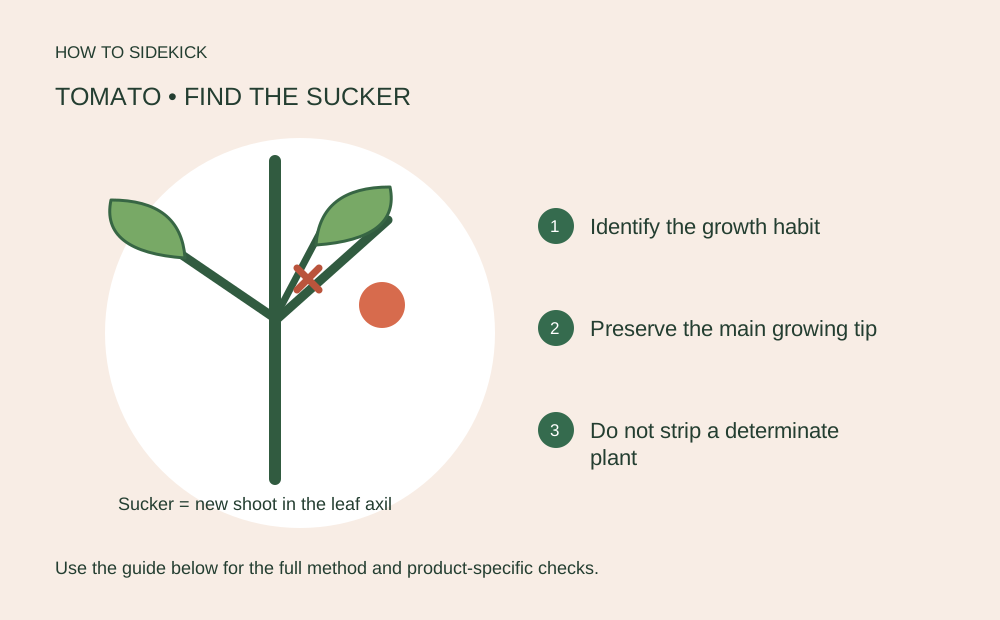
Check the variety first. Indeterminate tomatoes may benefit from selective sucker removal to suit their supports. Determinate tomatoes usually need little pruning; removing all their suckers can remove productive growth.
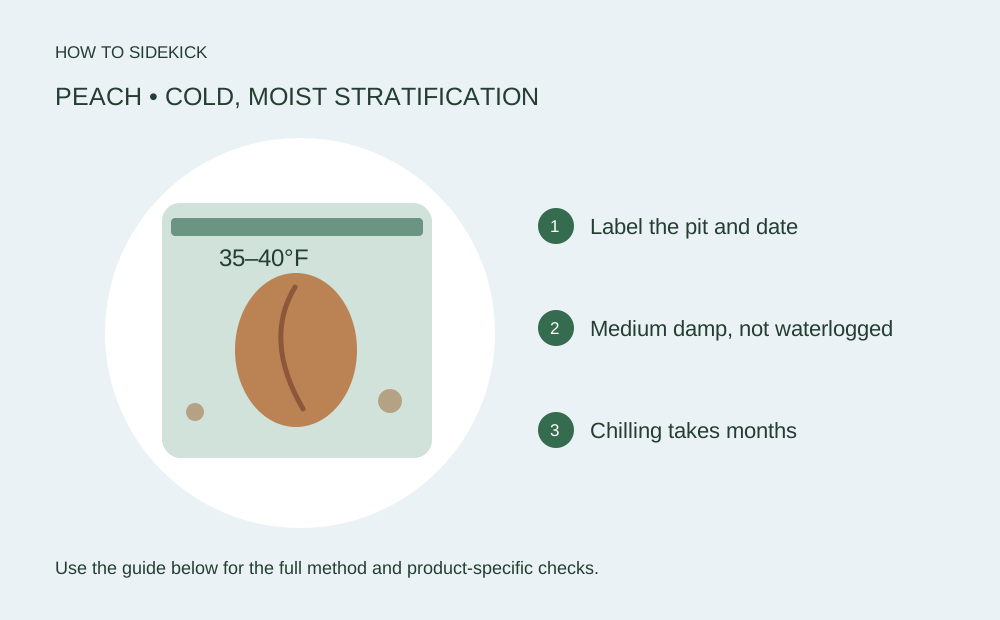
Clean a ripe peach pit, give it a cold, moist chilling period and plant carefully when it begins to germinate. A seedling will not reliably match its parent; choose a grafted nursery tree if predictable fruit is your priority.
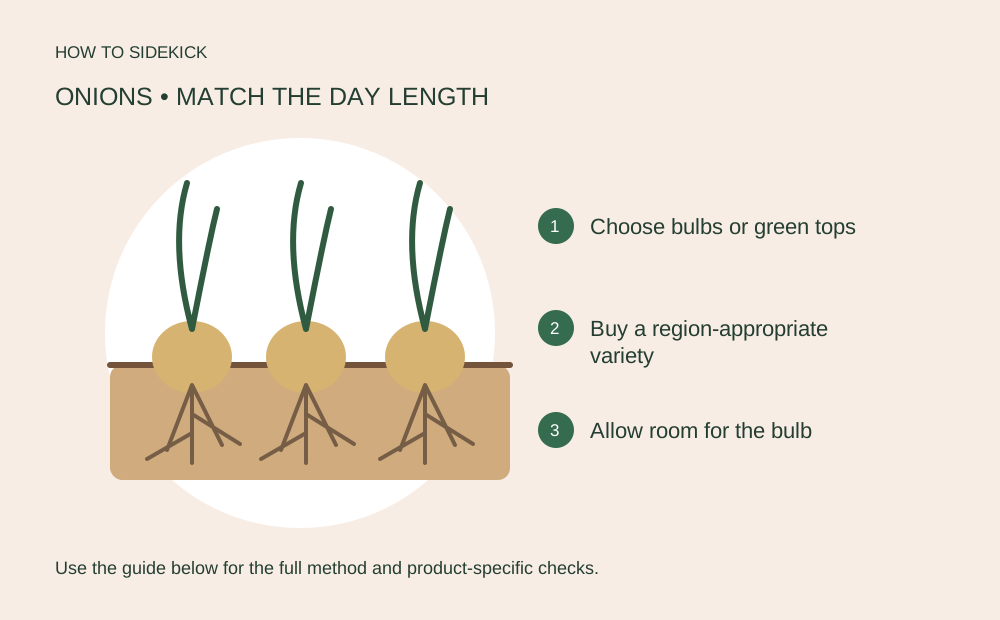
For full bulbs, start with a variety suited to your region’s day length and plant in sunny, well-drained soil. Keep weeds down and moisture consistent. Regrowing a kitchen onion for greens is a different project.
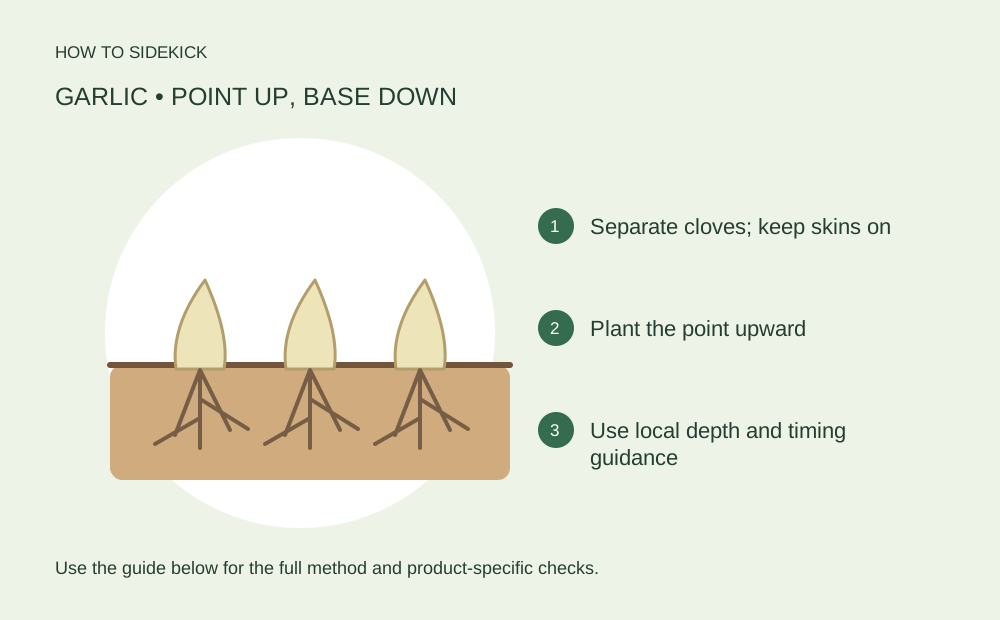
Plant healthy cloves separately, pointed end up, in loose well-drained soil. Keep their papery skins on. Fall planting is common in cold-winter areas, but timing and variety should match your region.
 Back to the Roots organic potting mix, 1 cu ftLowe’s · Product
 Corona Precision floral scissorsLowe’s · Product