A dusty plant is easy to overlook until you move it into better light. Cleaning smooth leaves is a small maintenance job that also gives you a chance to inspect the plant closely. Work gently and match the method to the leaf surface rather than treating every houseplant the same way.
For suitable smooth leaves, support each leaf and wipe gently with a soft damp cloth. Use plain water and skip shine products.
Go straight to the stepsBefore you begin
Hairy, delicate, or specially coated leaves may need a different approach. Check the plant’s care guidance before wetting or rubbing them.
What you’ll need
- A houseplant with smooth leaves
- A soft clean cloth
- Lukewarm water
- A protected working surface
Tools & supplies for this project
Affiliate disclosure: We may earn a commission when you buy through these Lowe’s links. How our links work.
Use what you already own. If you need supplies, compare these options with the requirements above and choose only the items your project needs.
Check Lowe’s for current price, availability and specifications.
Let’s do this
Step by step
- 01
Prepare a stable working space
Place the pot somewhere secure where drips will not damage furniture. Remove dust from the cloth itself before it touches the plant.
- 02
Dampen the cloth
Use lukewarm water and wring the cloth so it is damp rather than dripping. Do not add cooking oil, furniture polish, or a homemade shine mixture.
- 03
Support and wipe one leaf
Place your free hand beneath the leaf so the surface is supported. Wipe a small area of the upper face with light pressure, moving the supporting hand as needed. Keep the leaf attached and steady; do not grip the tip and pull against the stem.
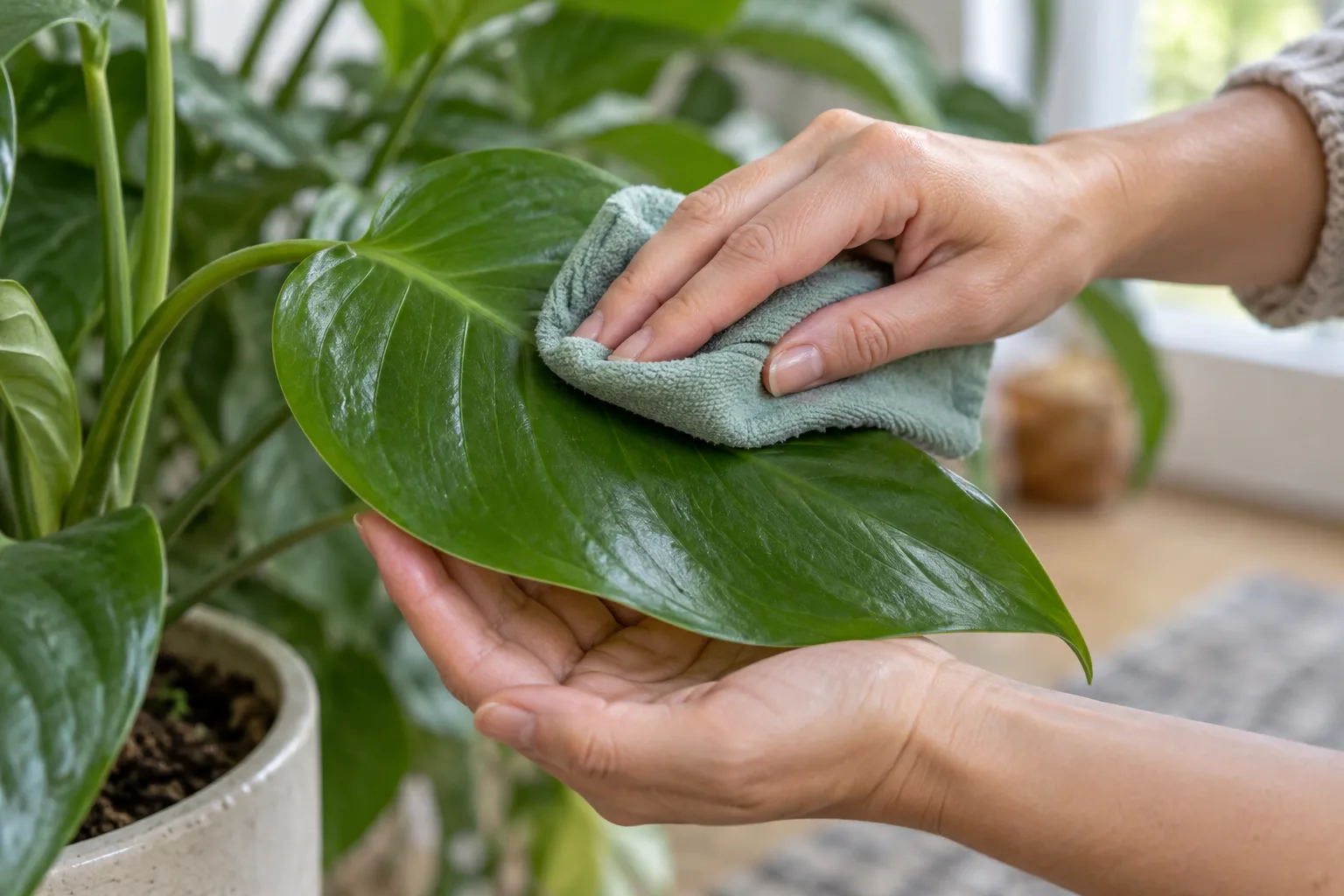
The lower hand supports the leaf; the cloth removes dust with light pressure. Use this method only on suitable smooth leaves.Open full-size image - 04
Rinse the cloth as you work
Refresh the cloth when it picks up dirt. Work through the plant in a consistent direction so you can tell which leaves are finished.
- 05
Inspect and return the plant
Look for unusual spots or pests while the leaves are close. Return the plant to its suitable growing location; cleaning is not a reason to move it suddenly into strong sun.
Optional supplies on Amazon
Affiliate disclosure: As an Amazon Associate I earn from qualifying purchases. How our links work.
Use what you already have. These links open Amazon search results so you can compare suitable supplies; they are not individual product reviews.
Use the job as an observation opportunity
Take a moment to notice whether a mark wipes away or is part of the leaf. Dust and permanent tissue damage are different things. If you find a suspicious change, photograph it and identify the problem before applying a treatment.
You do not have to clean a large plant in one uninterrupted session. Work through one section, mark your stopping point mentally, and return later. Supporting each leaf matters more than finishing quickly.
A natural finish is enough
The aim is to remove dust, not create a glossy coating. University of Minnesota Extension advises against leaf-shine products because they are unnecessary and can interfere with the leaf surface. A clean leaf may naturally be matte, textured, or patterned.
Put a reminder near your usual plant check, then clean when dust is visible. There is no need to rub leaves repeatedly just because the reminder appeared.
A quick final check
- Leaves were supported rather than pulled.
- The cloth was kept clean.
- No shine coating was added.
Common questions & sticking points
Can I wipe every plant with a wet cloth?
No. This method is for suitable smooth leaves. Hairy or delicate leaves need species-appropriate care.
Will cleaning fix brown patches?
No. Stop rubbing if a mark does not lift with gentle cleaning; it may be damaged tissue rather than dirt. Photograph any spreading or unusual patches and identify the cause before applying a treatment.
Sources & further reading Optional
References used to check this guide. Follow your product’s own safety instructions where its design differs.
Last source check: September 22, 2026