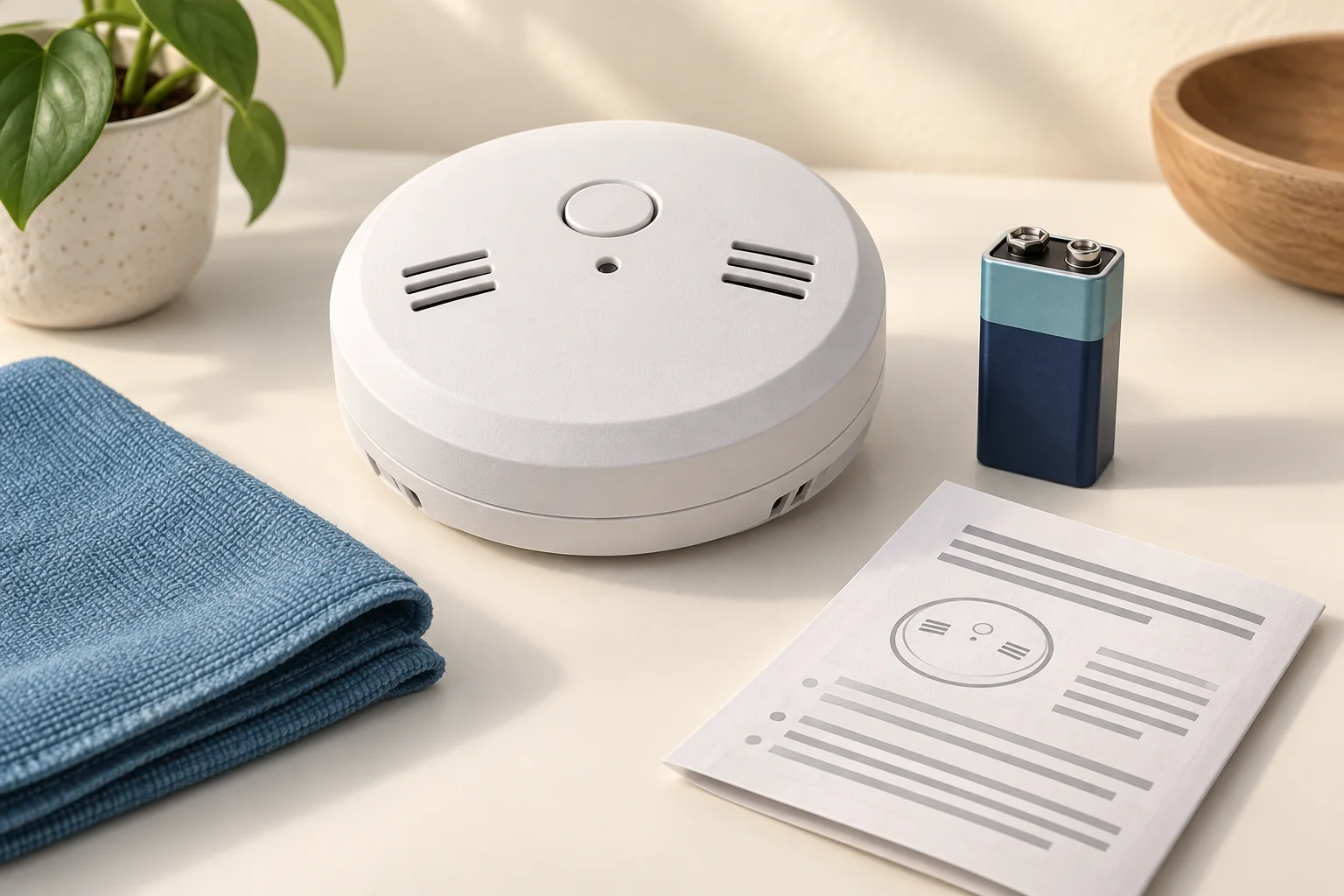
An occasional chirp can mean a weak battery, a fault or the end of the alarm’s life. Signal patterns are model-specific, and combination smoke/CO units add another distinction. Locate the actual sounding device before buying batteries; a nearby CO alarm can sound as if it is coming from the smoke alarm.
Treat a possible emergency alarm as an emergency. For an identified maintenance chirp, use the model’s signal chart to check battery, fault and end-of-life warnings.
Go straight to the stepsBefore you begin
If there may be smoke, fire or carbon monoxide, get everyone outside and call 911 from a safe place. Do not stay inside troubleshooting an uncertain alarm. Never leave protection disabled to silence it.
What you’ll need
- Alarm model and manual
- Stable step stool if needed
- Exactly specified replacement battery for a replaceable-battery model
- Compatible replacement alarm if expired or faulty
Let’s do this
Step by step
- 01
Separate emergency from maintenance
Look and listen only while it is safe. If the meaning is uncertain or there is smoke, a burning smell or possible CO danger, leave and seek emergency help. Do not use a web article’s generic beep count to override the device’s spoken warning or manual.
- 02
Find the model and date
For a routine chirp in safe conditions, identify the sounding unit and read its label and manual. Check the manufacture or replacement date. Smoke alarms generally need replacement at ten years, and a particular unit may require earlier replacement.
- 03
Check the specified power source
If the manual identifies a low replaceable battery, fit the exact approved type and polarity, then close the compartment fully. A sealed long-life unit is replaced as a whole when its instructions require it; do not pry open the battery.
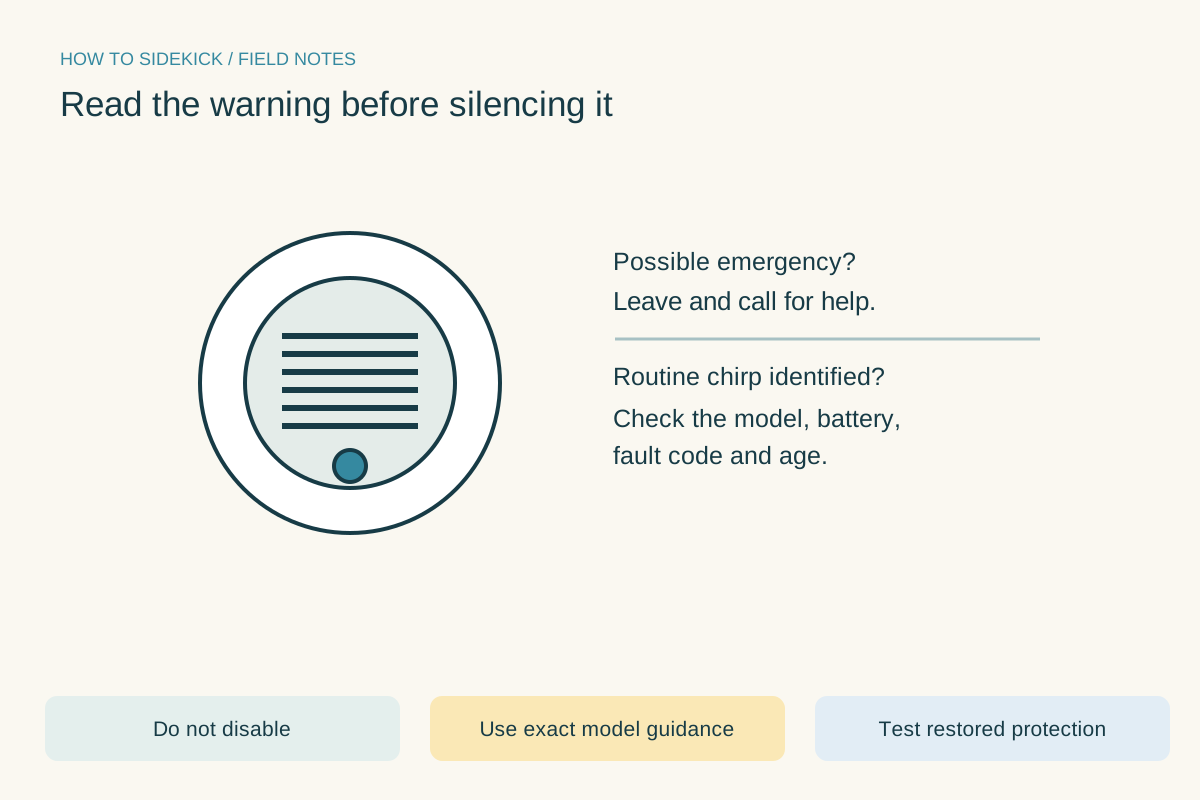
Read the warning before silencing it. Use the instructions below for the full procedure.Open full-size image - 04
Clean or reset only as directed
Follow the model’s approved dust-removal and reset steps. Do not spray cleaner inside or remove hardwired connections to experiment. A recurring fault or end-of-life signal needs correction or replacement, not repeated muting.
- 05
Test and restore protection
Refit the unit and use the test procedure in its manual. Check interconnected behavior where applicable. If the alarm fails its test or keeps warning, arrange prompt replacement or qualified help. Keep a note of the model, installation date and future test schedule.
A battery is not the answer to every chirp
Temperature changes can expose a weak battery, but a new battery cannot fix an expired alarm or a sensor fault. The signal chart and model date decide the next step. Buy a replacement that meets the home’s alarm and interconnection requirements.
A quick final check
- Emergency warning ruled out safely
- Actual unit and signal identified
- Model/date checked
- Alarm passed its test
Common questions & sticking points
Why does it chirp after a new battery?
Possible causes include the wrong battery, poor seating, a remaining fault or end of life. Use the exact model’s troubleshooting guide and test it.
Can I take the battery out until morning?
Do not leave the home without required working alarm protection. Correct the cause or install a suitable working replacement promptly.
Sources & further reading Optional
References used to check this guide. Follow your product’s own safety instructions where its design differs.
- US Fire Administration: smoke-alarm maintenance
- First Alert: causes of smoke-alarm chirping
- First Alert: alarm troubleshooting FAQs