Shriveled leaves can reflect damaged roots rather than a lack of water. If the mix stays wet and growth has stalled, inspect the roots for decay before watering again. Remove clearly rotten material and use fresh draining medium when rehabilitating the plant. Match the pot to the remaining roots so excess damp soil does not repeat the problem.
A small plant may occupy the same pot for years, but its medium still ages. Peat-based mixes can break down and drain less effectively. Inspect the mix periodically and refresh it when it becomes compacted or persistently wet. You may reuse the same suitable pot size after cleaning it; replacing exhausted medium does not automatically require a larger container.
Optional supplies on Amazon
Affiliate disclosure: As an Amazon Associate I earn from qualifying purchases. How our links work.
Lay a section of Tradescantia zebrina stem against moist potting mix so a node touches the surface. Keep that contact stable while roots form. Once the section has established roots, separate it from the parent if desired. This layering method uses the plant's natural ability to root at nodes and can help fill an open part of a pot.
Tradescantia zebrina can become sparse along older stems. Trim healthy tips and root several into fresh medium to rebuild the display, or add rooted tips around the existing plant. Pinch new growth to encourage branching and improve the light if stems are stretched. Handle the brittle nodes gently, and wash off sap if it irritates your skin.
Tradescantia zebrina usually roots without hormone. Take a healthy stem with nodes and place a lower node in water or moist potting mix; remove submerged foliage. Provide bright indirect light and monitor moisture. A damaged, leaf-only piece cannot substitute for a sound node-bearing stem, regardless of rooting products.
Measure the distance from the lamp to the leaves, not to the floor or pot rim. Start with the fixture manufacturer's guidance for that plant type and adjust as the canopy grows. Different fixtures deliver very different intensities at the same distance. Watch new growth and signs of scorching, and move the light or plants gradually rather than guessing from bulb wattage alone.
No. Roof overhangs, nearby buildings, trees, curtains, and distance from the glass all change the light that actually reaches a plant. Observe the location across the day and through seasonal changes. Match the plant to those conditions rather than using window direction as a guarantee. A supplementary light may help where an apparently sunny window is heavily shaded.
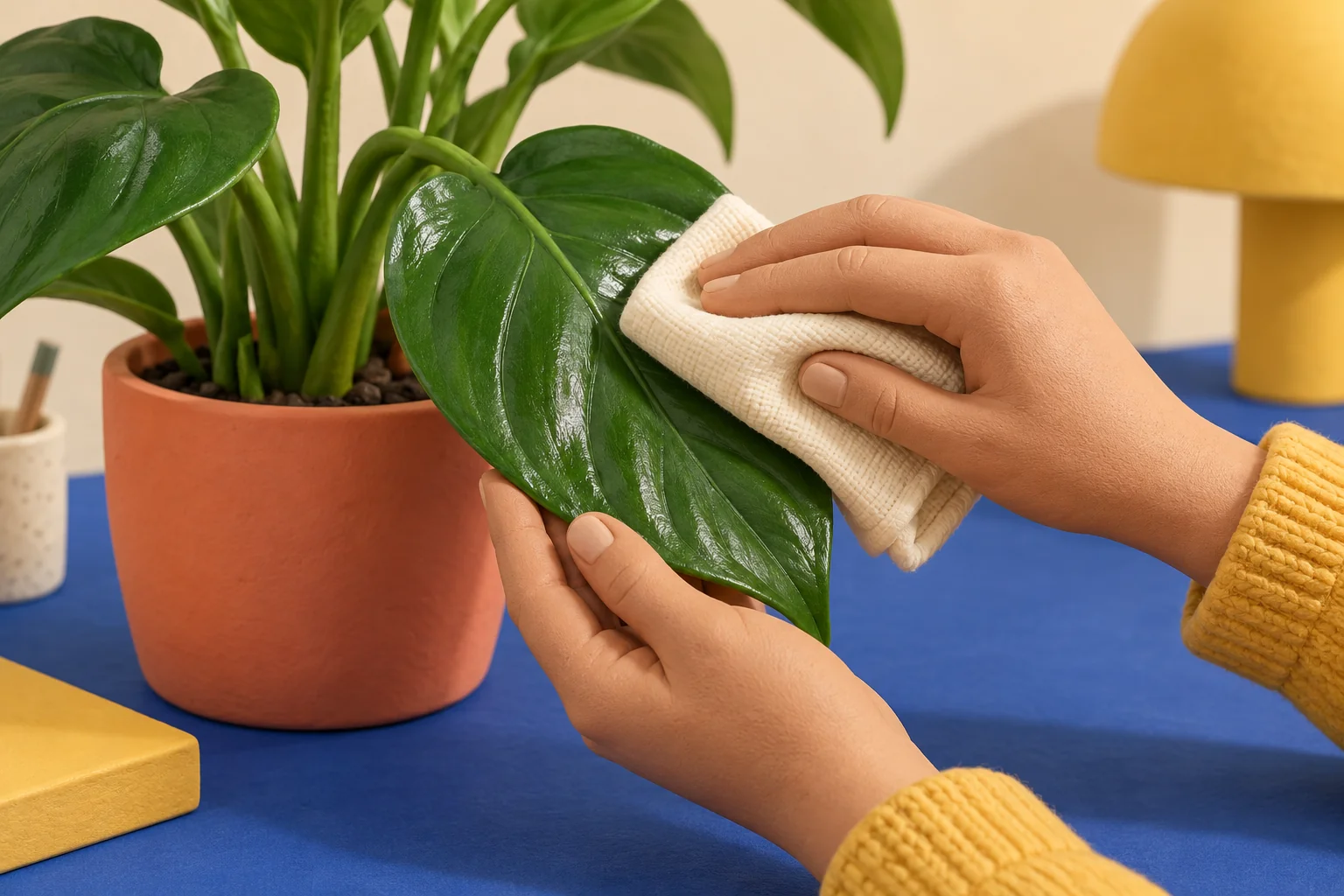
No. Stop rubbing if a mark does not lift with gentle cleaning; it may be damaged tissue rather than dirt. Photograph any spreading or unusual patches and identify the cause before applying a treatment.